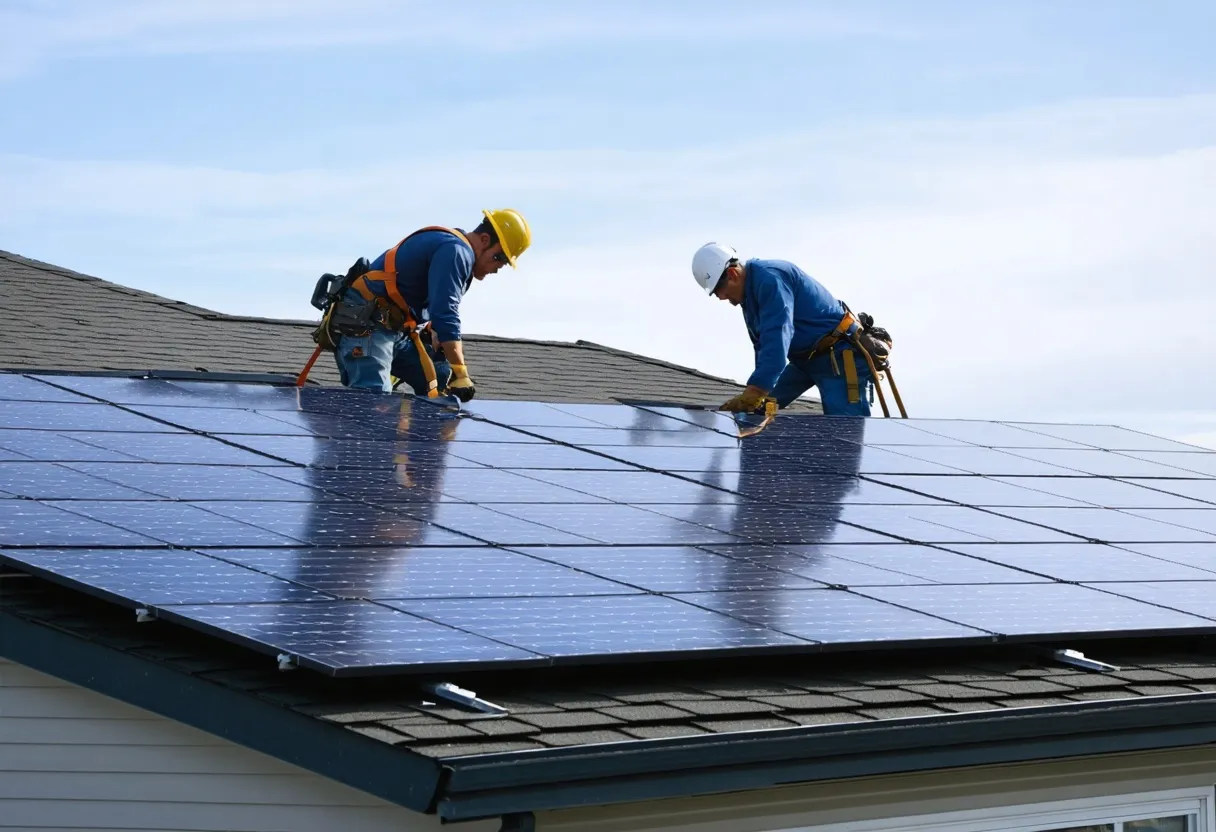
Chugiak sits far enough up the Glenn Highway that its solar math looks different even from the rest of the Anchorage bowl — bigger lots, more spruce and birch canopy, more ground-mount candidates, and homes further from the coastal moderating effect that keeps South Anchorage a degree or two warmer in January. A system designed for a tight in-town lot in Muldoon or Mountain View doesn't automatically translate to a five-acre parcel off the Old Glenn with a detached shop and a well pump that can't lose power. Solar Panel Installation Anchorage treats Chugiak as its own engineering problem: we size the array to your household's full annual kilowatt-hour curve, design racking that respects how snow actually sheds off a Chugiak roof pitch, and file your interconnection paperwork against Chugach Electric's current net-metering terms rather than a generic assumption.
This page is written specifically for homeowners searching for solar panel installation in Chugiak, AK — not a reskinned Anchorage page with the town name swapped in. Below you'll find how we qualify a Chugiak property before ever writing a proposal, what net metering with Chugach Electric actually means for a household this far up the highway, the questions Chugiak homeowners ask most, and the cost and incentive factors that are specific to larger, more tree-covered, and sometimes off-grid-adjacent properties.
How a Chugiak Install Gets Engineered Before It Gets Built
We pull twelve months of your actual Chugach Electric billing history and walk the property to map spruce and birch shading, since tree cover cuts winter production hardest when the sun angle is already low.
On many Chugiak lots the roof isn't the obvious answer — we check truss capacity against combined panel weight and Southcentral snow load, and price out ground-mount footings and trenching as a real alternative when the roof doesn't pencil out.
Tilt angle and racking hardware are selected to encourage snow to slide off cleanly rather than sit and shade the array, which matters more on a rural roof than on a sheltered in-town one.
We file the net-metering interconnection application and Municipality of Anchorage permits against the utility's current tariff, since the credit and billing rules that make solar economical are set by the utility, not by us.
After permission-to-operate, we recommend a check-in following the first heavy snow event to confirm the array is shedding as designed and production is tracking to the seasonal model in your proposal.
Signs Your Chugiak Property Is a Strong Solar Candidate
Net Metering With Chugach Electric: What It Means This Far Up the Glenn Highway
Net metering is the mechanism that makes solar pay off in Chugiak the same way it does anywhere else Chugach Electric serves: when your array produces more than your home is using — which for most Chugiak systems happens from roughly April through August, when Southcentral Alaska's daylight runs nearly around the clock — the surplus flows back onto the grid and credits your account. You draw against those credits during the months when a Chugiak roof or ground array simply can't generate much, which in this latitude means November through January regardless of how well the system is engineered. The economics only work if the system is sized against your real annual usage curve and against Chugach Electric's actual current net-metering tariff, not a number pulled from a national solar calculator that assumes Lower-48 daylight patterns.
Why this matters more for larger, rural-feeling Chugiak lots
A lot of Chugiak properties have more roof and land options than a denser Anchorage neighborhood, which is an advantage — it often opens up ground-mount as a genuine alternative to a shaded or poorly-pitched roof. But it also means the interconnection paperwork sometimes involves a longer run of conductor from a detached array to the service panel, or coordination if there's a secondary structure like a shop or barn on a separate meter. We confirm Chugach Electric's current interconnection requirements at the time your application is filed, because tariff terms and application requirements are the utility's to set and can be revised.
The Municipality of Anchorage itself operates a rooftop solar array on municipal facilities, which is worth mentioning here not as a sales pitch but as a plain fact: grid-tied solar sized correctly for this exact latitude and climate is proven, operating infrastructure in this community, not a concept borrowed from a sunnier state.
Chugiak Solar Questions We Hear Most
Is a ground-mount system a better fit than my roof for a Chugiak property?
It depends on your roof's pitch, orientation, and structural condition versus how much clear, unshaded land you have. We price both options in larger-lot proposals so you can compare trenching and footing costs against roof reinforcement costs directly.
How much does tree cover from spruce and birch actually cut into production?
It varies by lot, which is why we walk the property rather than rely on satellite imagery alone — shading that seems minor in summer can matter far more in winter, when the sun sits low and any obstruction blocks a larger share of the available light.
What percentage of my annual solar production will come from winter versus summer?
Southcentral Alaska's daylight swing means the large majority of annual output comes from the April-through-August stretch, with November through January contributing much less. We break this down by month in your proposal rather than giving a single annual average.
Do Chugiak properties qualify for the same incentives as in-town Anchorage homes?
Federal tax credit eligibility isn't location-dependent within Alaska, and programs like Anchorage Solarize have historically served the broader Municipality, but program status and figures change, so we confirm current eligibility as part of every proposal rather than quoting a fixed number here.
Can a battery keep my well pump running during an outage?
A correctly sized battery can, but well pumps often draw more startup current than homeowners expect, so we size battery capacity and inverter output around your actual critical loads, not just a generic backup package.
How long does permitting and Chugach Electric interconnection take for a Chugiak address?
Interconnection and permitting typically take longer than the one to three days of physical installation. We give you a specific estimate once we know your system size and whether ground-mount permitting or panel upgrades add steps.
Based on Ingra St. in Anchorage — Close Enough to Show Up After a Storm
We operate out of Anchorage, on Ingra St., which keeps site visits, warranty service, and post-storm checks realistic for Chugiak addresses rather than a multi-day wait for an out-of-state crew.
Cost, Incentives, and Warranty Factors Specific to a Chugiak Install
Two cost drivers show up more often in Chugiak proposals than in denser in-town jobs. The first is ground-mount work — trenching, footings, and conduit runs are a real line item when a property's best solar exposure is a clear patch of yard rather than a south-facing roof, and it's worth pricing against roof-mount reinforcement before assuming one is automatically cheaper. The second is electrical service condition: older rural services sometimes need panel or meter-base upgrades to safely accept a solar interconnection, and that cost is easy for a rushed quote to leave out entirely. Snow-load structural reinforcement, when a roof-mount is the chosen path, is the third recurring factor — Southcentral Alaska snow accumulation is a real engineering input, not a rounding error.
On the incentive side, the federal Residential Clean Energy Credit applies to Chugiak installations the same as anywhere else Chugach Electric serves, covering both the array and qualifying battery storage as a direct dollar-for-dollar credit against taxes owed — we confirm the current percentage and your specific eligibility in your proposal rather than quoting a figure that could be out of date. Locally, the Anchorage Solarize program has historically organized group-buy pricing across the Municipality, and it's worth asking any installer you're evaluating whether they've participated in or currently track that program, since group pricing isn't available outside it.
Whatever proposal you're comparing, make sure it separates the four warranty categories clearly: panel product warranty, panel performance warranty, inverter warranty, and the installer's own workmanship warranty covering racking and roof penetrations. The workmanship warranty is the one that matters most after a heavy snow year, and it's issued by whoever installs your system — not the manufacturer. If you're ready to see real numbers for your specific Chugiak roof or lot, request a free site evaluation and we'll build a proposal around your actual usage, your actual land or roof, and Chugach Electric's current net-metering terms.
Request your free quote
See what a winter-ready system would look like on your home, with no pressure to move forward.
More solar panel installation services
Get a system built for Anchorage winters
Reach out for a no-obligation quote sized to your roof and this climate.