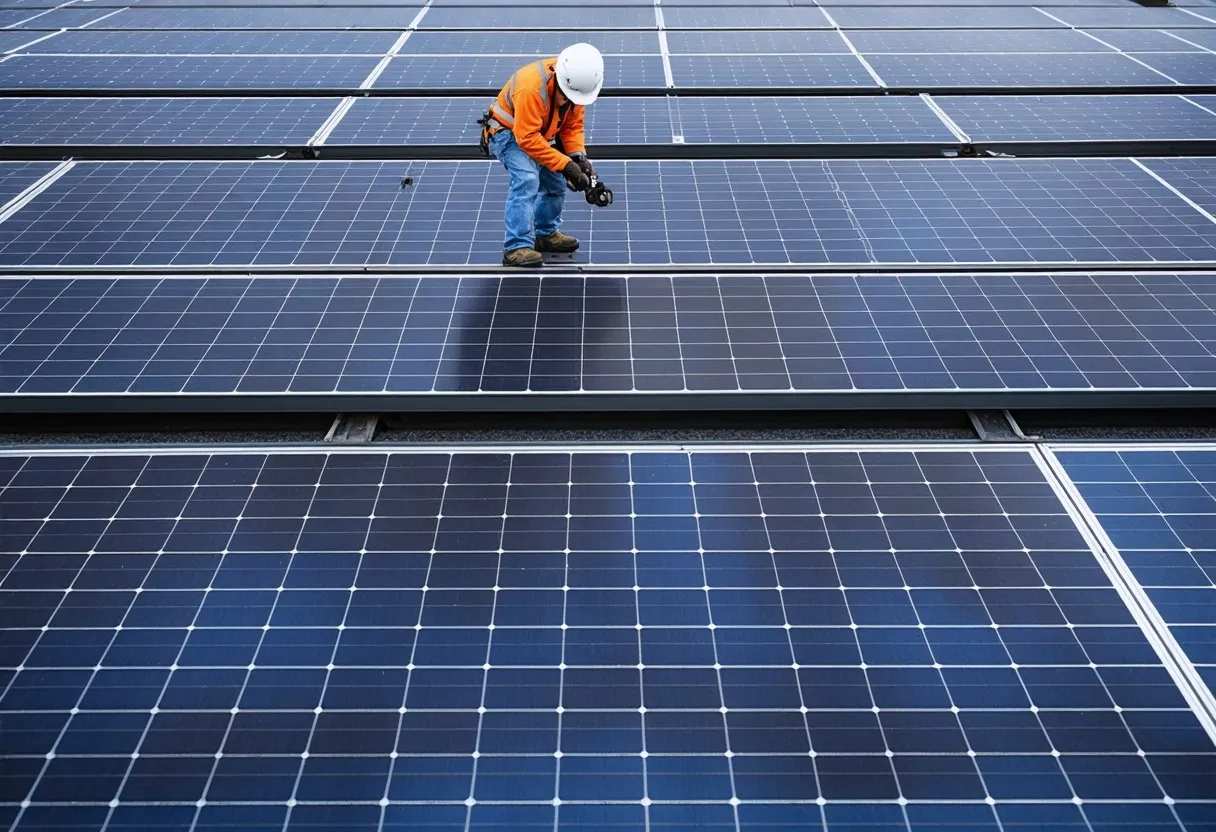
Solar panel installation in Eagle River, AK starts from the same core question as anywhere else in the Chugach Electric service territory — does the investment make sense this far north — but the details that decide whether a system actually performs are specific to this valley. Eagle River sits closer to the Chugach Mountains than most of the Anchorage Bowl, and that proximity changes how the sun tracks across a roof through the shoulder seasons, how much snow a given street tends to hold onto through the winter, and how much of a lot's tree cover — birch, spruce, cottonwood, all common on Eagle River properties — ends up shading an array that would sit clear on a more open downtown lot. None of that makes Eagle River a worse solar market. It means a layout copied from a flat, open roof elsewhere in the metro area won't automatically translate here without genuine site-specific design work.
Because Eagle River is part of the Municipality of Anchorage, the permitting authority, the interconnection process, and the net metering credit structure all run through the same channels as the rest of the Anchorage Bowl — specifically Chugach Electric. That shared framework is genuinely useful: an installer who already knows Chugach's interconnection paperwork, typical review timelines, and inspection requirements isn't guessing at your project the way a crew unfamiliar with this utility would be. What still has to happen every single time, though, is a real walk of your specific roof — sighting your sun path against the terrain and treeline behind the house, confirming your racking is specified for the snow load your particular street tends to carry, and checking your roof's structural condition before anything gets bolted down. This page covers what that process actually looks like from first call to the moment Chugach Electric flips your system on, what drives cost, and how to tell a properly engineered Eagle River quote from a generic one.
What Makes an Eagle River Roof a Strong Solar Candidate
Snow Load, Foothill Shading, and Tree Cover: Eagle River's Design Variables
Two things separate an Eagle River solar design from a downtown Anchorage one, and both come down to terrain. The first is elevation and proximity to the Chugach foothills, which tends to mean more persistent snowpack on north-facing and partially shaded roof sections through the winter than a comparable roof closer to the coast would see. Racking has to be specified for the actual dead-load that snow adds to your roof structure, and panel spacing and tilt angle need to encourage shedding rather than letting snow bridge across rows, where it can sit and block production for weeks after a storm even once the rest of the neighborhood has cleared.
Tree cover and lot layout
The second variable is vegetation. Eagle River's larger, more wooded lots mean a meaningful share of potential shading comes from your own trees or a neighbor's, not just the roof's compass orientation. A proper site assessment traces the sun's path across your specific roof through the low winter sun angle — when even a modest stand of spruce to the south can shade part of an array for hours a day — and models that against your roof's usable area before a layout is finalized. Skipping this step is one of the more common reasons a system underperforms the numbers on its own proposal.
Older roofs, newer subdivisions, and covenant checks
Eagle River has a mix of older, established neighborhoods and newer planned subdivisions, and both bring their own pre-installation checks. An older roof may need a structural or condition review before it can safely carry an array and its snow-load-rated racking, which is worth raising with your installer before design work goes too far. In newer, covenant-governed subdivisions, it's also worth confirming there are no homeowners' association restrictions on visible rooftop equipment before signing a contract — a five-minute question up front avoids a costly redesign later.
How the winter daylight constraint compounds terrain effects
Layered on top of both of these is the same Alaska winter daylight constraint every Chugach Electric customer deals with — the swing from nearly round-the-clock summer light to just a few usable hours in December. In Eagle River, that constraint interacts directly with foothill shading: a roof that gets full sun in July can lose several of its already-limited December daylight hours to a ridge or treeline that simply isn't in the way when the sun sits higher in the sky. Good system design in this valley accounts for that seasonal shift explicitly, sizing the array against your full annual usage curve rather than a best-case summer estimate.
None of this makes Eagle River a harder market for solar — it makes it a market where design work has to be done properly rather than assumed. An installer who treats a wooded, foothill-adjacent Eagle River lot as interchangeable with a flat, open Midtown roof is the installer most likely to hand you a system that disappoints every December, either because the racking wasn't rated for what your street's snow actually does, or because nobody accounted for the treeline behind your house before finalizing the layout. Over a system's multi-decade lifespan, that upfront design accuracy matters more than any other single decision you'll make.
From First Call to Permission-to-Operate: The Eagle River Timeline
Your installer starts by reviewing a full twelve months of Chugach Electric usage history rather than a single bill, since Eagle River's seasonal swing between long summer days and short winter ones makes any one month a poor sizing guide.
A technician walks your roof and lot in person to evaluate pitch, orientation, and structural condition, and to trace the shading your specific trees and the surrounding foothills cast at different points in the year rather than relying on satellite imagery alone.
Using your usage history and site data, the installer sizes the array and specifies racking and panel spacing around your roof's actual snow-load conditions and structural capacity, not a generic Anchorage-wide template.
Your installer files the municipal building permit and the interconnection application with Chugach Electric, a stage that is mostly paperwork and processing time rather than active work on your roof, so ask for a realistic timeline rather than a best-case one.
Crews mount racking and panels during a stable weather window, a municipal electrical inspector confirms code compliance, and Chugach Electric issues permission to operate before your system can legally begin exporting to the grid and earning net metering credit.
Financing, Incentives, and Net Metering for an Eagle River System
Net metering through Chugach Electric is what makes an Eagle River system work financially despite the seasonal production swing: excess summer generation banks as credit against the grid draw you'll lean on more heavily in December and January. Get the current credit structure and interconnection terms in writing directly from Chugach Electric or your installer before finalizing a system size — utility rules can be updated over time, and a quote built on outdated terms will misstate your real payback period.
On top of net metering, most homeowners stack additional support to bring the effective cost down. The federal residential clean energy tax credit lets qualifying homeowners claim a percentage of total system cost — equipment and labor — against federal tax liability; confirm the current percentage and eligibility rules with a tax advisor or your installer rather than relying on an outdated figure, since federal credit terms are set by Congress and can change. Locally, the Anchorage area has run Solarize-style group-buy programs that use neighborhood purchasing power to negotiate lower per-watt pricing and pre-vet participating installers — worth asking about directly, since these cooperative programs typically run on a limited enrollment window rather than year-round.
As for whether solar genuinely holds up at this latitude: the Municipality of Anchorage has installed rooftop solar on municipal property, which is a useful reference point for Eagle River homeowners weighing whether the technology is proven here rather than experimental. It is, at both institutional and residential scale, provided the system is sized and engineered for the actual site rather than assumed from a warmer, flatter market's numbers.
Financing itself typically runs through one of a few paths: a cash purchase, which carries no interest and the fastest payback since you keep the full value of the tax credit and net metering; a dedicated solar loan that spreads cost over several years while you still own the system and its tax benefits outright; or, for homeowners with sufficient equity, a home equity loan or line of credit that can carry a lower rate than an unsecured solar loan. Whichever path you use, ask your installer to model payback using Chugach Electric's actual net metering terms and your household's real usage data, not a national average electricity rate that has nothing to do with Southcentral Alaska.
Payback timelines vary meaningfully from one Eagle River property to the next, since they depend on your roof's actual production potential, your household's usage pattern, and which financing path you choose — there's no single "typical" number that applies across the neighborhood. Ask any installer to walk you through their payback math line by line, using your real usage data and Chugach Electric's actual net metering terms, before you compare it against a competing quote.
A Locally Based Team, Not a Fly-In Crew
An installer with an established presence in the Anchorage area — including offices along Ingra St. in Anchorage — is easier to reach for a warranty service call in year eight than a crew that flew in for a single project and left town. That kind of local accountability matters over a system's multi-decade lifespan, especially in a climate that tests racking, flashing, and roof penetrations every single winter.
Eagle River Solar Questions Homeowners Actually Ask
Is Eagle River served by the same utility as the rest of Anchorage for net metering?
Yes. Eagle River is part of the Municipality of Anchorage and falls within Chugach Electric's service territory, so the same net metering rules, interconnection application, and inspection timeline that apply across the Anchorage Bowl apply here as well. That consistency is useful when comparing installers, since a crew that regularly files with Chugach Electric already understands the paperwork and typical review times rather than learning the utility's process on your project.
Do the Chugach foothills actually block enough sun to matter?
It depends entirely on your specific lot, roof orientation, and how close your house sits to a ridge or dense treeline. This is exactly why a proper site assessment traces your sun path against the actual terrain and vegetation behind your house rather than assuming a flat, unobstructed roof the way a satellite-only estimate might.
Does Eagle River get more snow than the rest of Anchorage, and does that change the racking?
Snow accumulation varies street by street and roof face by roof face depending on elevation and exposure, so racking should always be specified for your roof's actual load rather than a citywide average. Ask any installer you're considering for the specific engineering rating behind their racking recommendation and how it accounts for your property.
Can I go off-grid instead of interconnecting with Chugach Electric?
It's possible for remote parcels near the Chugach foothills without practical grid access, but it requires a significantly larger battery bank and usually a backup generator to cover the darkest solstice weeks, since solar alone can't reliably meet demand through that stretch. For a typical Eagle River home that already has a Chugach Electric connection, staying grid-tied and using net metering is almost always the simpler and more cost-effective route.
How much does Eagle River's tree cover affect my quote?
Trees are one of the biggest variables a site assessment accounts for, and two homes with visually similar roofs can end up with different array layouts and production estimates if one has clear southern exposure and the other has mature spruce shading part of the roof for several hours a day. Ask your installer to explain, specifically, how your trees factored into their production estimate.
How long does the process take from consultation to actually powering on?
The physical installation itself is typically just a few days, but the full process — including design, municipal permitting, and Chugach Electric's interconnection approval — usually runs several weeks to a few months, with utility and municipal processing time being the biggest variable rather than the on-roof work. Ask any installer you're considering for their current, realistic timeline rather than a best-case estimate.
How to Compare Eagle River Solar Quotes
Two quotes for the same Eagle River address can look wildly different in price without either one being wrong — they may simply describe two different systems. Before comparing total price, line bids up on price per watt, which normalizes for system size, and ask each installer to name the specific panel, inverter, and racking brands they're proposing rather than accepting a vague "Tier 1 panels" label, which describes a marketing tier and not a technical spec.
For an Eagle River property specifically, push further on two points that a generic Anchorage-wide quote sometimes skips. Ask to see the racking's engineering rating for snow load and confirm it was matched to your roof's actual accumulation and pitch, not a citywide default. And ask how the shading analysis accounted for your specific trees and the terrain behind your house, rather than a satellite estimate alone — a good installer should be able to point to exactly which trees or ridgelines factored into your production number. Also confirm the projected annual production figure was modeled against Southcentral Alaska's real seasonal daylight curve; a national-average estimate will overstate winter output and understate how much your system needs to lean on a banked summer surplus through net metering.
Finally, get the workmanship warranty term in writing separately from the panel and inverter manufacturer warranties, since a poorly sealed roof penetration or an under-rated racking bracket is an installation issue your installer is responsible for, not a manufacturer defect. Ask what happens to that warranty if the installing company changes hands or closes, and ask for references from Eagle River or nearby Anchorage-area customers whose systems have been through at least one full winter — a real first-winter track record tells you far more than an install-day photo. Bring your last twelve months of utility bills and a few roof photos to your first conversation so every installer you talk to is quoting against the same real information.
Once your system is energized, ask your installer to walk you through the production monitoring dashboard and to check back in after your first full winter specifically — not just after the first sunny summer month. A system that matches its modeled production through an Eagle River December and January, when foothill shading and snow cover are working against it the hardest, is the real proof that the design was done correctly in the first place.
Request your free quote
See what a winter-ready system would look like on your home, with no pressure to move forward.
More solar panel installation services
Get a system built for Anchorage winters
Reach out for a no-obligation quote sized to your roof and this climate.